

Heading east from the bustling Poblacion of Kabankalan City, the landscape begins to dramatically shift. The flat, commercial plains slowly give way to rolling hills, cooler breezes, and expansive stretches of green. About 19 kilometers from the city proper lies Barangay Camingawan, a massive upland territory positioned squarely at the heart of Negros Island.
For travelers seeking to understand the agricultural soul of southern Negros, Camingawan isn’t just a scenic pitstop—it’s a destination. Far removed from the coastal seafood hubs and the downtown traffic, this barangay is a quiet powerhouse of education, farming, and breathtaking rural terrain.
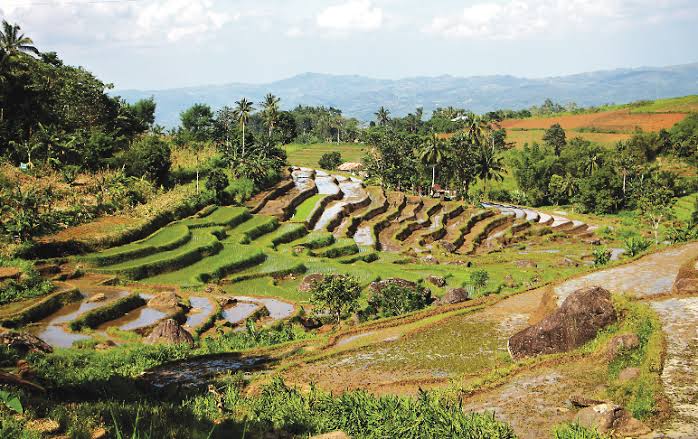
Source: Agriculture Monthly
The Cradle of Agricultural Education
To tell the story of Barangay Camingawan is to tell the story of post-war resilience. After the devastation of World War II, Kabankalan—and the entire province of Negros Occidental—needed to urgently rebuild its agricultural backbone.
The turning point for Camingawan came on August 1, 1947, when the government chose this exact highland area to establish the Negros Occidental National Agricultural School (NONAS). Pioneered by Jose F. Crisanto, it was the very first agricultural institution established by a Filipino superintendent, designed specifically to spearhead the region’s recovery.
Today, that humble agricultural school has evolved into the Central Philippines State University (CPSU). And when we say this campus is large, we mean massive. Occupying a staggering land reservation of approximately 4,653.7 hectares, the CPSU main campus dominates the landscape of Camingawan. It has transformed the barangay from a remote highland settlement into a bustling, student-filled hub of agricultural innovation, research, and forestry conservation.
A Landscape Forged by Farming
Because it borders the municipality of Mabinay (the mountainous gateway to neighboring Negros Oriental), Camingawan’s geography is beautifully rugged. It is defined by steep mountain gradients, forested watersheds, and highly fertile upland valleys.
For the locals who call this barangay home, life is deeply tied to the soil. While the lower barangays of Kabankalan focus heavily on mechanized sugarcane milling, the farmers of Camingawan engage in highly diversified, sustainable agriculture:
- Highland Crops: The cooler elevation and rich soil allow for the robust cultivation of root crops, upland rice, and corn.
- Livestock and Poultry: Expansive grazing lands make it an ideal location for raising cattle, goats, and free-range poultry, which supply the local markets.
- Agro-Forestry: With the continuous research backing of CPSU, there is a massive community push toward sustainable forestry, bamboo cultivation, and protecting the local sub-watersheds that feed the vital rivers below.
The Evolution of the Land
Camingawan used to be even larger than it is today. In fact, its landmass was so vast and its population so spread out across the mountainsides that local governance became a logistical challenge.
In the early 1990s, the residents of a massive sub-village petitioned for independence to better manage their local resources. This eventually led to the creation of Barangay Tagukon, which was carved directly out of Camingawan’s southern territory. Even after this division, Camingawan remains one of the largest and most geographically significant barangays in the city.
The Future: Eco-Tourism and Heritage
As Kabankalan City pushes forward with modern development, Barangay Camingawan is sitting on a goldmine of eco-tourism potential. The sprawling university grounds, the historical legacy of NONAS, and the untouched natural beauty of the surrounding hills offer a perfect escape for nature lovers and heritage travelers looking for a change of pace.
If you are curating a travel itinerary for southern Negros, a drive up to Camingawan is essential. It represents the quiet, enduring strength of Kabankalan—a community that doesn’t just grow food, but actively teaches the next generation how to cultivate the future.