
If you journey to the absolute farthest reaches of Kabankalan City’s mountain ranges, far beyond the concrete highways and sugarcane mills, you will arrive at a sprawling, fertile valley. This is Barangay Carol-an—a place where the air is cool, the mountains are vast, and the history is written not in textbooks, but in the very blood and spirit of the land.
For heritage travelers, cultural anthropologists, and locals tracing the deepest roots of Negros Occidental, Barangay Carol-an is not just a rural farming community. It is the sacred ancestral heartland of the Bukidnon Karulano (or Karolano) people—the only officially recognized indigenous tribe in Kabankalan City.
Let’s explore the breathtaking landscape, the enduring agricultural economy, and the tragic yet heroic history that makes Carol-an a place of profound significance.
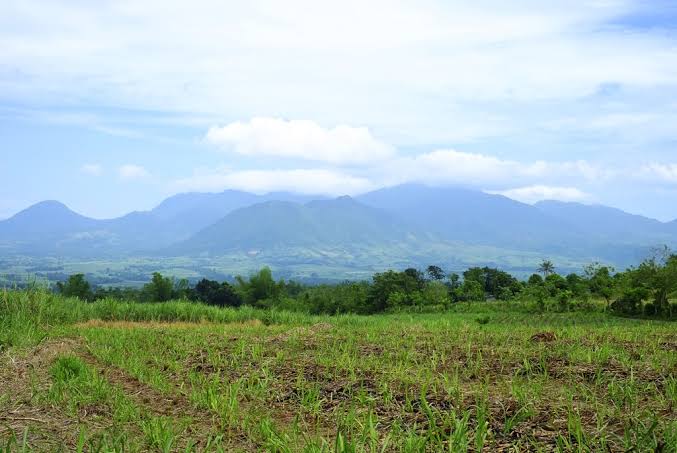
Source: PeakVisor
The Bukidnon Karulano: Guardians of the Valley
With a population approaching 7,000 residents, Barangay Carol-an is a culturally distinct enclave. The indigenous Bukidnon Karulano people who call this valley home have lived here for centuries. They even have their own distinct Bisayan Austronesian language—Karolanos or Karol-an—a highly unique dialect because Kabankalan is the only place on earth where it is natively spoken.
The community’s daily life is deeply intertwined with their nearly 4,000-hectare ancestral domain. They possess rich socio-cultural traditions that have survived into the modern era:
- The “Kagon”: A respected community elder who serves as the mediator for resolving local disputes, preferring customary law over external legal systems.
- The “Buhat”: A traditional nature-based ritual often involving the offering of a sacrificial pig to honor ancestral spirits and ask for a bountiful harvest.
- The Sinugabin Dance: A deeply symbolic traditional dance performed during harvest times, representing a ritual offering of gratitude and a plea for future abundance.
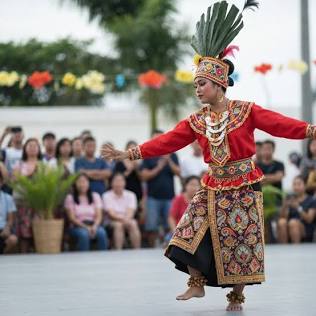
Source: Bacolod Philippines
The 1856 Carol-an Tragedy: A Story of Unyielding Courage
To truly understand the pride of the Karulano people, one must look back to the year 1856. It was a year that defined the tribe’s fierce independence, culminating in what historians call the bloodiest and most tragic event in the history of the Philippines: The Carol-an Tragedy.
During the Spanish colonial era, Spanish military forces—led by the notoriously cruel Governor Emilio Saravia—and Recollect missionaries sought to force the Karulano people to leave their mountain strongholds and resettle in the lowland Poblacion.
The tribe was led by their brave chieftain, Datu Manyabog. Initially, the Spanish priests managed to peacefully persuade the Datu to consider the move. However, greedy lowland merchants, fearful of losing their massive profits from the tribe’s agricultural goods, sowed seeds of intrigue and paranoia between the Spanish Governor and Datu Manyabog.
Realizing they were being cornered, Datu Manyabog and his warriors fortified their mountain stronghold, preparing to defend their homeland with only spears, bolos, and swords against Spanish artillery.
Tragically, Datu Manyabog was killed by a cannon blast during the siege. Seeing their great leader fall, the Karulano people made a heartbreaking, heroic choice: they refused to be taken as prisoners or slaves. The tribe retreated to their communal dwellings, set their own huts on fire, and perished in the flames, while others threw themselves off the mountain cliffs. Over 300 tribe members chose mass suicide over Spanish subjugation.
Today, the spirit of Datu Manyabog lives on in the valley, guiding the modern generation of Karulanos who still fiercely protect their cultural identity.
An Upland Agricultural Powerhouse
Despite its geographic isolation, Barangay Carol-an is a massive contributor to the economy of Kabankalan City. The valley’s cool climate and fertile volcanic soil make it an agricultural paradise.
The Karulano people are traditionally shifting cultivators. They farm the steep mountain slopes and deep valleys, producing massive quantities of:
- Upland Rice and Corn
- Tobacco
- Root crops (like sweet potatoes and cassava)
- High-yield vegetables
Because the barangay yields such an abundance of crops, these goods are continuously transported down the mountainside to supply the bustling public markets of the city proper. Farming here is not just a livelihood; it is a sacred rhythm tied to the seasons and the land.
The Future: Eco-Tourism and Cultural Preservation
Today, Barangay Carol-an is slowly opening its doors to respectful eco-tourism. The local government of Kabankalan City recognizes the Carol-an Valley as a premier highland destination for travelers seeking authentic cultural immersion and breathtaking natural landscapes.
Through the efforts of local tribal leaders and the National Commission on Indigenous Peoples (NCIP), progressive steps are being taken to integrate Indigenous Peoples (IP) Education into the local schools. This ensures that the Karol-an language, the traditional dances, and the heroic tale of Datu Manyabog are passed down to the next generation.
A visit to Barangay Carol-an is not just a trip into the mountains. It is a journey into the beating, indigenous heart of Negros Occidental—a valley where the land is rich, the culture is unbroken, and the people are as enduring as the mountains that surround them.