

When you peel back the layers of Kabankalan City’s rapid modernization, you find communities whose histories are etched directly into the soil. Covering over 755 hectares of sprawling, productive land, Barangay Linao is one such place.
Far more than just a rural outpost, Linao is a brilliant tapestry of ancient nomadic tribes, Spanish-era haciendas, and the enduring resilience of the Negrense farmer. For locals tracing their roots and history buffs exploring the agricultural evolution of southern Negros Occidental, Barangay Linao offers a captivating journey from untamed grasslands to a thriving sugar empire.
The Era of the “Tigbaw” and Nomadic Hunters
To understand the origins of Barangay Linao, you have to travel back to the 1300s and 1400s. Long before the endless grids of sugarcane fields dominated the landscape, this vast area was entirely wild, covered in thick, towering native grass known locally as “Tigbaw.”
During this pre-colonial era, the land was a pristine hunting ground. According to oral history handed down through generations of local elders, the earliest inhabitants were nomadic indigenous tribes—specifically the Ate, Agta, Magahat, and Odong.
These early settlers lived entirely off the bounty of the land. They relied on hunting wild game, fishing in the local waterways, and making small, manual clearings in the thick Tigbaw grass to grow native corn and rice. It was a rugged, highly self-sufficient way of life, completely untouched by the massive sugarcane industry that would eventually define the region.
The Rise of Hacienda Bearin and the Historic Church
The destiny of Barangay Linao shifted dramatically at the turn of the 20th century. As the global demand for sugar skyrocketed, the vast, fertile plains of Kabankalan caught the attention of foreign investors.
The area became the site of Hacienda Bearin Central, a massive agricultural operation managed primarily by Spanish and German landowners. This marked the official introduction of widespread sugarcane cultivation to the barangay.
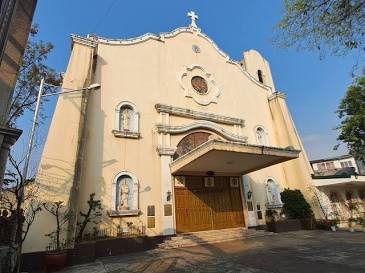
However, the hacienda owners didn’t just build sugar mills; they built a community landmark. In 1910, through the auspices of the estate managers, the very first Catholic church was constructed in Linao.
Source: Wikipedia
This wasn’t a fragile, makeshift chapel. It was a highly durable edifice featuring thick concrete walls, heavy wooden beams, and a factory-formed corrugated galvanized-iron roof. Stewarded by the Catholic priests of the Columban Congregation—notably Fr. Cronin, Fr. Hurley, and Fr. Cavanaugh—the church became the absolute spiritual epicenter of the region. During the Lenten season, Catholic faithful from neighboring towns and remote sitios would flock to Linao to attend services, cementing the barangay’s role as a regional religious hub.
The Sakada Migration and the Sugar Boom
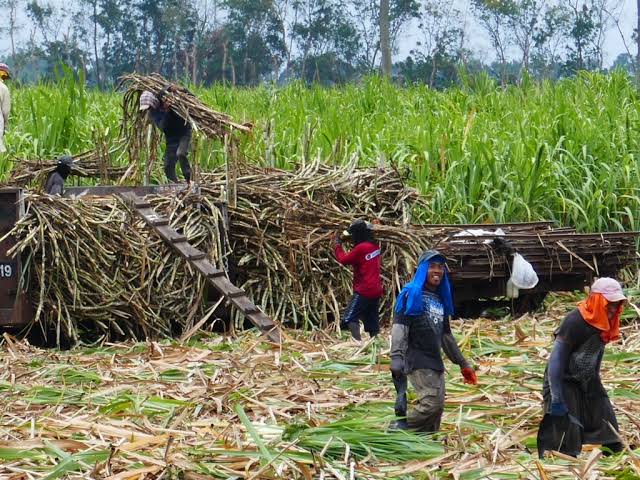
As the sugar production at Hacienda Bearin intensified, the local workforce wasn’t enough to meet the grueling demands of the tiempo suerte (milling season).
This labor shortage triggered a massive wave of seasonal migrant workers, known locally as “Sakadas.” Interestingly, a significant portion of these workers migrated across the sea from the town of Guimbal in Panay Island. Many of these hardworking migrants eventually settled in Linao permanently, intermarrying with the locals and significantly boosting the barangay’s population and cultural diversity.
Source: Mr. Philippines 1974 Pinoy Traveller – WordPress.com
The barangay endured its share of historical turbulence. During World War II, Japanese soldiers occupied the area to control the strategic sugar mill, an occupation that lasted until the American Liberation. Through it all, the community held strong, guided by early local leaders like Crispin Gerasmia, who served as the first Teniente Del Barrio (Barangay Lieutenant).
The Green Revolution and Modern Resilience
In the post-war decades, Barangay Linao embraced modernization. The introduction of the “Green Revolution” brought high-yielding varieties (HYVs) of rice and modern farming technologies to the area. While this drastically increased rice and sugarcane yields, it also tied many local farmers into complex credit and loan systems, a challenge that the community has continuously navigated through local cooperatives.
The true strength of Linao, however, lies in its resilience against nature. The barangay has weathered devastating super typhoons like Nitang and Roping. In response to these environmental challenges, the community partnered with the Department of Environment and Natural Resources (DENR) to implement aggressive tree-planting programs, proving their commitment to protecting their land.
A Thriving, Independent Community
Today, Barangay Linao is a highly progressive and bustling agricultural center. Guided by dedicated local governance, the barangay has seen massive infrastructure improvements, including the paving of crucial farm-to-market access roads, the construction of a multi-purpose covered court, and the establishment of localized health and day-care centers.
The opening of the Talubangi National High School – Linao Extension has ensured that the youth of the barangay have direct access to secondary education. Furthermore, the local economy is energized every week by its lively Sunday Market Day, a bustling event where farmers, weavers, and merchants converge to trade their goods.
Barangay Linao is a beautiful testament to Kabankalan’s history. It is a community that rose from the wild Tigbaw grass, built a booming sugar economy with the bare hands of migrant sakadas, and continues to stand resilient and proud in the Rising City of the South.