

When tracing the economic backbone of Kabankalan City, you cannot overlook the sweeping, fertile landscapes of Barangay Tampalon.
Located roughly 23 kilometers away from the bustling commercial center of the Poblacion, Tampalon is an absolute titan among Kabankalan’s 32 barangays. Spanning a massive 6,495.92 hectares of sprawling highlands and gently sloping valleys, this barangay is a brilliant showcase of rural resilience, traditional craftsmanship, and natural beauty.
For travelers looking to experience the authentic, hardworking soul of southern Negros Occidental, Tampalon offers a journey into a community whose identity is deeply woven into the very land it cultivates.
The Agricultural Basket of the Rising City of the South
To understand Barangay Tampalon, you have to look at the soil. The barangay is officially classified as an urbanizing area due to its massive population—surpassing 13,800 residents and making it the second most populous barangay in all of Kabankalan City. Yet, despite this massive demographic footprint, its heart remains proudly agricultural.
Tampalon is universally recognized by locals as the Agricultural Basket of the Rising City of the South. The majority of the residents are fiercely dedicated to farming, utilizing the expansive valleys to cultivate the region’s top three agricultural pillars:
- Sugarcane: Like much of Negros Occidental, vast tracts of land here are dedicated to sugarcane, providing crucial seasonal employment during the milling season.
- Rice: The irrigated lowlands and terraced slopes yield abundant rice harvests, ensuring local food security.
- Corn: Serving as both a staple crop and a high-demand agricultural product in the local markets.
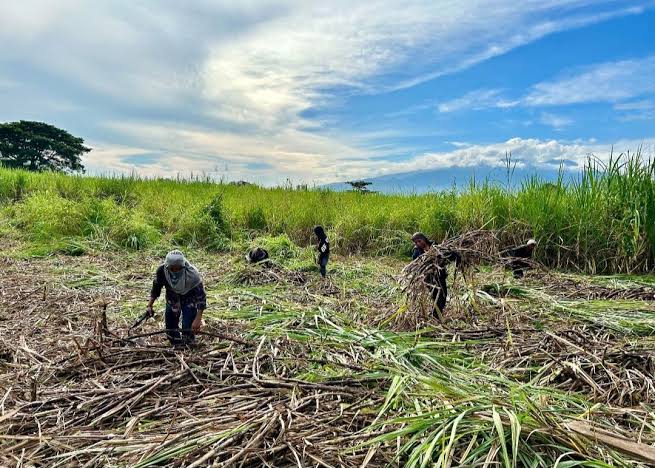
Source: GMA Network
For the people of Tampalon, harvesting these crops is not just an occupation; it is a generational pre-occupation that dictates the rhythm of daily life.
The Tapas-Ani Festival: A Celebration of the Harvest
This deep connection to agriculture culminates every year in a grand, vibrant celebration. Tampalon is famously known across Kabankalan as the home of the Tapas-Ani Festival.
Held every last Sunday of March in conjunction with the barangay’s annual fiesta, the festival is a massive, colorful thanksgiving for a bountiful harvest. The name itself is a portmanteau of the community’s primary livelihoods:
- Tapas: The local term for cutting or harvesting sugarcane.
- Ani: The general term for harvesting rice and corn.
During the Tapas-Ani Festival, the usually quiet highland streets erupt with street dancing, agricultural showcases, and community feasts. It serves to honor local history, promote the barangay’s agricultural products, and bind the massive population of 13,800 residents together in shared gratitude.
Creative Heritage: The Art of the Banig
Beyond the sugarcane fields, the people of Tampalon possess a deeply rooted creative heritage. The barangay is well-known for its traditional weavers.
During the off-season, many locals dedicate their time to weaving their own “Banig” (traditional handwoven mats). Using locally sourced reeds and natural materials, these weavers create intricate, durable mats that are sold in the city proper. This craft not only provides supplemental income for farming families but also preserves a beautiful piece of indigenous Philippine artistry that is slowly fading in more commercialized areas.
Unearthing Adventure: Udlom Cave
While agriculture and weaving define the local economy, Barangay Tampalon also holds a secret for eco-tourists and thrill-seekers: Udlom Cave.

Source: kabankalan city – WordPress.com
Far removed from the paved highways, Udlom Cave is a pristine natural wonder hidden amidst huge, ancient boulders. Reaching the cave requires a guided, hour-long trek through the barangay’s rugged highland terrain. For spelunkers and nature lovers, the journey is incredibly rewarding. Exploring the cave offers a stark, quiet contrast to the bustling agricultural fields, highlighting the diverse geographical wonders hidden within Kabankalan’s borders.
A Progressive Highland Community
Today, Barangay Tampalon stands as a shining example of rural progress. It manages to support one of the largest populations in the city while fiercely protecting its agricultural heritage. With its vibrant festivals, skilled weavers, and hidden caves, Tampalon is not just an agricultural basket—it is a cultural treasure chest waiting to be explored.