
When you look at a map of Kabankalan City, the urban density of the Poblacion eventually gives way to expansive agricultural lands, which then transition into deep, rolling highlands. If you keep traveling south—approximately 52 kilometers away from the bustling city proper—you will eventually reach the very edge of Kabankalan’s territory.
Welcome to Barangay Locotan.
Holding the title as the farthest barangay from the city center, Locotan is a massive, sprawling frontier. Sharing its southern and western borders with the municipalities of Bayawan (Negros Oriental) and Ilog, this barangay is a world away from the traffic and commercial malls of the lowland city. For heritage travelers, cultural researchers, and adventure seekers, Locotan offers a rare, unfiltered glimpse into the indigenous history and untouched landscapes of southern Negros.
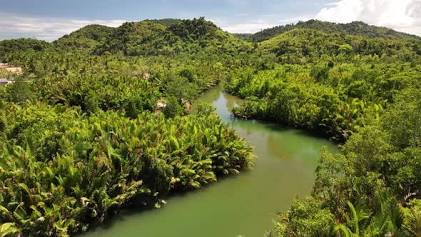
Source: VideoHive
“Nilukotan”: The Land Coiled by Rivers
To understand the character of this distant barangay, you first have to look at its name.
The name “Locotan” is derived directly from the local Hiligaynon word “Nilukotan,” which translates to “surrounded by” or “coiled by.” This is not just a poetic metaphor; it is a literal description of the barangay’s geography. The vast landmass of Locotan is physically coiled and embraced by two major waterways: the Ilan Creek and the Locotan Creek.
Covering a staggering land area of over 6,400 hectares and sitting at an estimated elevation of 194 meters above sea level, Locotan is a geographic giant. The terrain is characterized by steep slopes, dense secondary forests, and wide agricultural valleys that require resilience and deep environmental knowledge to navigate.
The Maghats and the Ubosnon Migration
Because of its extreme distance from the coast and the city center, Locotan was historically isolated. Long before the concrete roads were paved, this deep forest territory was the exclusive domain of the Maghats (or Magahats)—the nomadic indigenous natives of the island.
The Maghats lived in small, clustered tribal communities. Their way of life was deeply traditional, relying entirely on foraging, hunting, and shifting cultivation within the dense forests.
However, the landscape of Locotan changed dramatically in the 1950s. A group of lowland migrants, referred to locally as the “Ubosnon,” ventured deep into the mountains and discovered the area. Seeing the vast, bountiful, and completely untapped agricultural potential of the land, these pioneers quickly convinced their friends and relatives—many hailing from Murcia and the northern parts of the province—to migrate south and settle the area.
Initially, this migration caused friction. The indigenous natives, wary of the new settlers who were armed with paltik (homemade rifles), retreated deeper into the dense forests. But time and shared hardships in the remote mountains eventually bridged the gap. The Ubosnon settlers reached out, befriended the natives, and established a coexistence that laid the foundation for the modern barangay.
A Living Sanctuary of Indigenous Healing
One of the most fascinating aspects of modern-day Locotan is how its historical isolation has preserved ancient cultural practices—particularly when it comes to healthcare.
Because the barangay is so far from the major hospitals in the Poblacion, the residents have retained a deep, generational reliance on indigenous health practices. Recent ethnographic studies conducted in the area reveal that many locals still turn to traditional healers for non-emergency ailments.
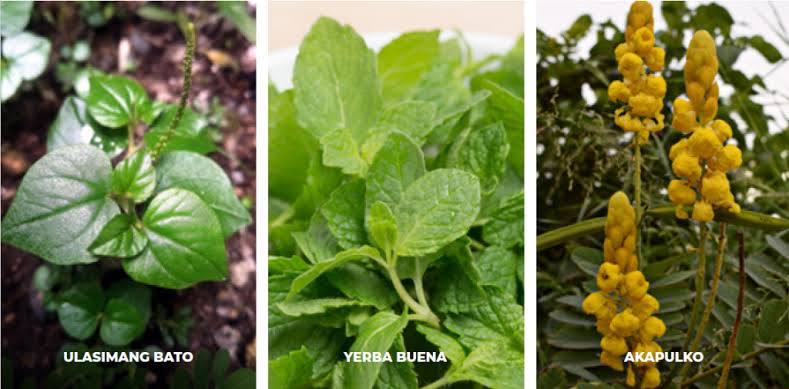
Source: UP Manila
If you visit Locotan, it is not uncommon to find the community relying on:
- The Surhano (Folk Healer): Respected elders who use a combination of herbal concoctions, spiritual prayers, and traditional diagnostic methods to treat illnesses.
- The Hilot (Traditional Masseur): Experts in treating sprains, muscle pains, and joint issues using deep tissue massage and local oils.
- The Paltera (Traditional Midwife): While the city government has built health centers, traditional midwives still hold a place of deep respect in the community.
- Herbal Medicine: The dense forests surrounding the barangay serve as a natural pharmacy, providing leaves, barks, and roots used for brewing medicinal teas and poultices.
For the residents of Locotan, these practices are not just alternatives; they are a proud, functioning part of their cultural identity.
Agriculture and the Road Ahead
Today, with a population of over 5,400 residents, Locotan is a highly productive agricultural zone. The vast lands that once intimidated early settlers are now utilized for cultivating upland rice, corn, and root crops. The barangay is equipped with five elementary schools, two secondary schools, and numerous day-care centers to ensure that education reaches even the most remote sitios.
As the City Government of Kabankalan pushes for wider infrastructure development, the roads leading to Locotan are continuously being improved. This creates an exciting opportunity for the future: bringing agricultural resources down to the city faster, while potentially opening up this beautiful, rugged frontier to eco-tourism.
Barangay Locotan is a testament to the adventurous spirit of the Kabankalanon. It is a place where the rivers coil around the land, the history of the natives and settlers intertwine, and the ancient traditions of healing are kept alive in the cool mountain breeze.