

If you travel approximately 53 kilometers southeast from the bustling commercial center of Kabankalan City, the concrete urban landscape gradually surrenders to the sweeping, elevated terrain of the provincial borders. Here, at the very edge of the city—sharing a boundary with the municipality of Mabinay in Negros Oriental—lies Barangay Inapoy.
Sitting at an estimated elevation of 131 meters above sea level, Inapoy is a sprawling highland community. For heritage travelers, cultural enthusiasts, and locals exploring the deeper roots of southern Negros, this rural barangay offers a captivating journey back in time. It is a place where the air is cooler, the pace of life is dictated by the harvest, and the history is deeply woven into the spoken word.
The Legend of the Exhausted Travelers: How Inapoy Got Its Name
To truly appreciate Barangay Inapoy, you must know the charming and enduring folk tale of how it earned its name.
Centuries ago, walking was the only mode of transportation to reach this distant highland village. One day, a family of six from the lowland town proper decided to migrate to the area, drawn by stories of its serene environment and abundant resources. Because they were traveling on foot with young children, the uphill trek through the dense forest took days.
As they finally neared the settlement, the exhausted children began trailing behind, gasping for air and crying out to their mother in the local dialect: “Linang, Inang, kapoy!” (Mother, mother, I am tired!).
When they arrived, the early settlers heard the children repeatedly saying the phrase. Misconstruing the breathless cries of the children, the locals believed the family was declaring the name of the place as “Inahapoy” (a local term loosely associated with shortness of breath or exhaustion from a long trek).
As years passed, visitors from the lowlands would arrive at the village and exclaim, “Inang, makapoy ka gid!” (Mother, it is so tiring!). Over generations, the name organically shortened and evolved into Inapoy. Today, rather than a symbol of exhaustion, the locals embrace the name as a badge of honor—a testament to the resilience required to reach and cultivate their beautiful highland home.
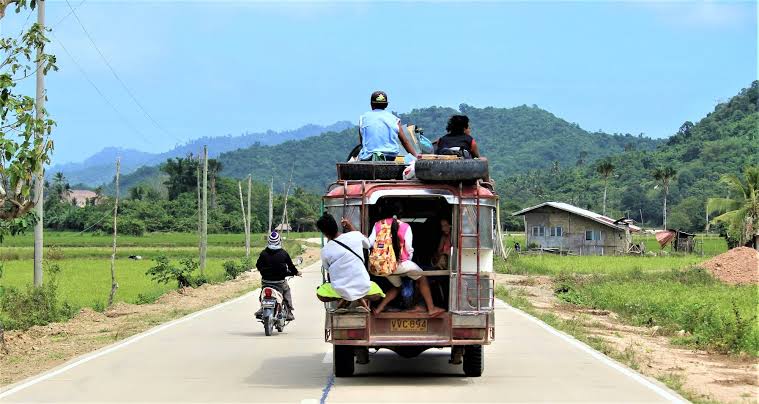
Source: Lifestyle.INQ – Inquirer.net
The Indigenous Roots: The Maghats and the Bukidnon
Long before the weary travelers arrived, the lands of Inapoy were sheltered by tall cogon grass and tropical flora. The very first inhabitants were indigenous tribes known as the Maghats and the Maayong Laki (Bukidnon).
The social fabric of these early settlers was highly traditional and deeply connected to the wilderness. Men (referred to as utuan) dominated the neighborhood hierarchy, often seen leading their families through the forest with a spear or bolo in hand. The women (called daray) would follow, carrying heavy baskets of goods on their heads supported by woven oway (rattan).
Their homes were simple camarins featuring a pantaw (an open bamboo back porch) where a tadyaw (large earthen jar) stored their precious drinking water, fetched using bamboo tubes called bayong.
The Spirit of Dagyaw and Balitaw
If there is one thing that defines the historical culture of Inapoy, it is the spirit of communal unity.
During the harvest season, the natives practiced a beautiful tradition called Dagyaw. They would invite close friends, relatives, and neighboring tribes to help reap the crops. In return for their labor, a generous portion of the harvest was shared with everyone who helped.
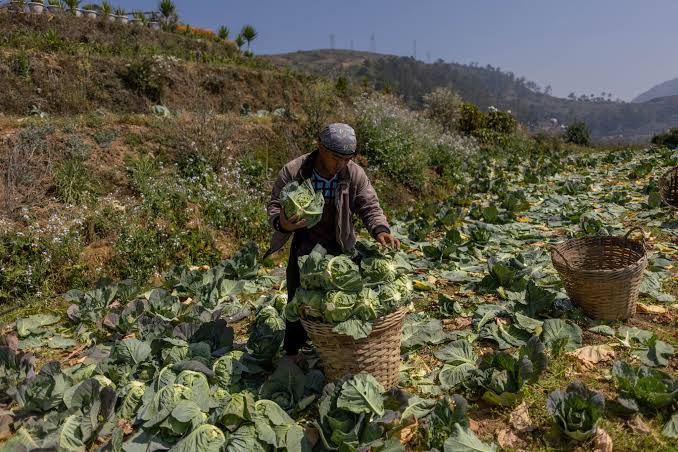
Source: South China Morning Post
When the harvest was particularly bountiful, or during important occasions like weddings, the village would strike a massive brass gong. The echoing sound would travel through the mountains, signaling everyone to gather. The natives would prepare sinaga (a special pre-cooked meat) as a gift for guests and perform the Balitaw—a traditional, rhythmic thanksgiving dance that brought people together from miles away in celebration of nature’s bounty.
A Growing Upland Economy
Today, Barangay Inapoy has evolved far beyond its ancient barter systems and footpaths. With a population that surged past 6,100 residents in the 2024 census (a massive 37% increase since 2020), it is one of the fastest-growing rural barangays in Kabankalan City.
While modern roads now connect Inapoy to the city proper, its economy remains proudly agricultural. The vast, fertile lands bordering Negros Oriental are utilized for cultivating upland rice, corn, and high-yield vegetables. Because of its strategic location near the provincial border, Inapoy serves as a vital agricultural corridor, facilitating trade between the farmers of the Negros highlands and the commercial markets of Kabankalan.
Barangay Inapoy stands as a beautiful reminder of Kabankalan’s diversity. It is a place where ancient indigenous traditions paved the way for a thriving, modern agricultural community—a highland frontier well worth the journey.