

If you continue your journey past the bustling seafood markets of Binicuil and head toward the very edge of the city’s coastal limits, you will find yourself in Barangay Bantayan.
Bordering the neighboring municipality of Ilog, Bantayan is the final frontier of Kabankalan City before the land fully gives way to the open sea. While it shares the coastal geography of Binicuil, Bantayan offers a much quieter, deeply traditional way of life. It is a place where time seems to slow down, dictated not by the clock, but by the shifting of the tides.
Source: Philippine News Agency
The Name’s Origin: A Watchful Coast
The name “Bantayan” is derived from the Hiligaynon word bantay, which means “to watch” or “to guard.” Much like its upland counterpart, Tan-Awan, Bantayan historically served as a coastal lookout point for early settlers keeping an eye out for Moro pirates entering the gulf during the Spanish colonial era.
Today, the residents of Bantayan are no longer watching for pirates; they are watching the weather, the water currents, and the seasonal migrations of fish.
The Dual Economy: Fishing and Farming
What makes Bantayan unique is its perfectly balanced dual economy.
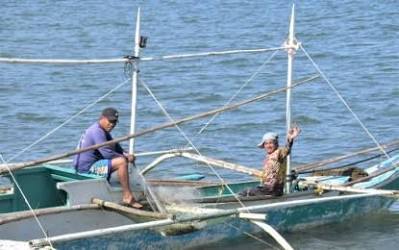
- The Coastal Front: The side of the barangay that faces the sea is entirely dedicated to traditional fishing. Local fishermen use small, motorized bancas (outrigger boats) to cast their nets before dawn. They rely on the rich marine biodiversity of the Panay Gulf, bringing in daily catches of bangus (milkfish) fry, squid, and local pelagic fish.
- The Inland Plains: Just a few kilometers inland from the beach, the sandy soil transitions into fertile plains. Here, the community engages in rice farming and coconut cultivation.
This combination of farming and fishing means that Bantayan is highly self-sufficient. It is a classic representation of the traditional Philippine barrio lifestyle, where neighbors share their daily catch and harvest.
Preserving the Coastal Charm
While Kabankalan pushes for Highly Urbanized City status, barangays like Bantayan serve as a necessary anchor to the city’s rural, natural roots. The local government is increasingly looking at the coastal stretch of Bantayan for its eco-tourism potential. Efforts to preserve the local mangrove forests not only serve as a breeding ground for fish but also present an opportunity for sustainable, nature-based tourism in the future.
For now, Barangay Bantayan remains Kabankalan’s quiet coastal guardian—a beautiful, sun-drenched community that provides the city with its daily harvest from the sea.