

When tracing the history of Kabankalan City, historians often point to the thick groves of Bangkal (Nauclea orientalis) trees that once populated the area. It was from these trees that the early settlers derived the name “Kabankalan.” Today, the land where those trees once stood has transformed into the concrete and asphalt of the Poblacion, and right at the center of this urban transformation is Barangay 2.
Classified as an urban barangay, Barangay 2 is a compact yet highly significant district in the city proper. With a population of over 1,500 residents, it may not be the largest barangay by landmass or population, but its strategic location makes it one of the most vital administrative and residential nodes in southern Negros Occidental.
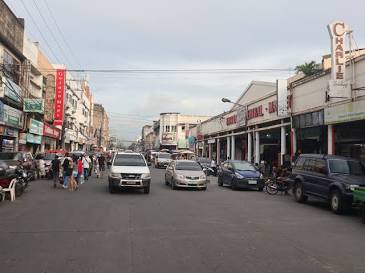
Source: Wikimedia Commons
A Hub for Essential Services
If Barangay 1 is the commercial gateway, Barangay 2 can be best described as the administrative and emergency backbone of the city. For a city applying for Highly Urbanized City (HUC) status, having a centralized, accessible location for essential government services is critical—and Barangay 2 provides exactly that.
A quick walk through the boundaries of this barangay reveals its critical role in the daily operations of Kabankalan:
- Safety and Order: The barangay is situated in incredibly close proximity to the Philippine National Police (PNP) station and the Kabankalan City Fire Station, ensuring that emergency response times in this district are among the fastest in the province.
- Justice and Governance: The Regional Trial Court (Branch 61) is easily accessible from here, making the barangay a frequent stop for legal professionals and citizens dealing with civic matters.
- Public Health: Aside from its own barangay health center, it is a stone’s throw away from the Dr. Gumersindo Garcia Sr. Memorial hospital and various local pharmacies, providing immediate healthcare access to its residents.
The Urban Residential Experience
Despite being surrounded by government buildings and the constant hum of city traffic, Barangay 2 maintains a surprisingly tight-knit residential community. The families living here represent the generational continuity of Kabankalan. Many of the homes tucked behind the main thoroughfares have stood since the post-World War II rehabilitation era, when the establishment of nearby sugar mills propelled the town into an agro-industrial powerhouse.
Living in Barangay 2 means living at the center of everything. Students residing here enjoy short commutes to major schools like Kabankalan National High School and Fortress College, while professionals are just minutes away from the commercial districts.
As Kabankalan City continues its rapid economic ascent—currently ranking as the second-highest city in gross income in Negros Occidental—Barangay 2 stands as a testament to orderly urban planning. It perfectly balances the demands of a growing city’s infrastructure with the preservation of a close, localized community.